
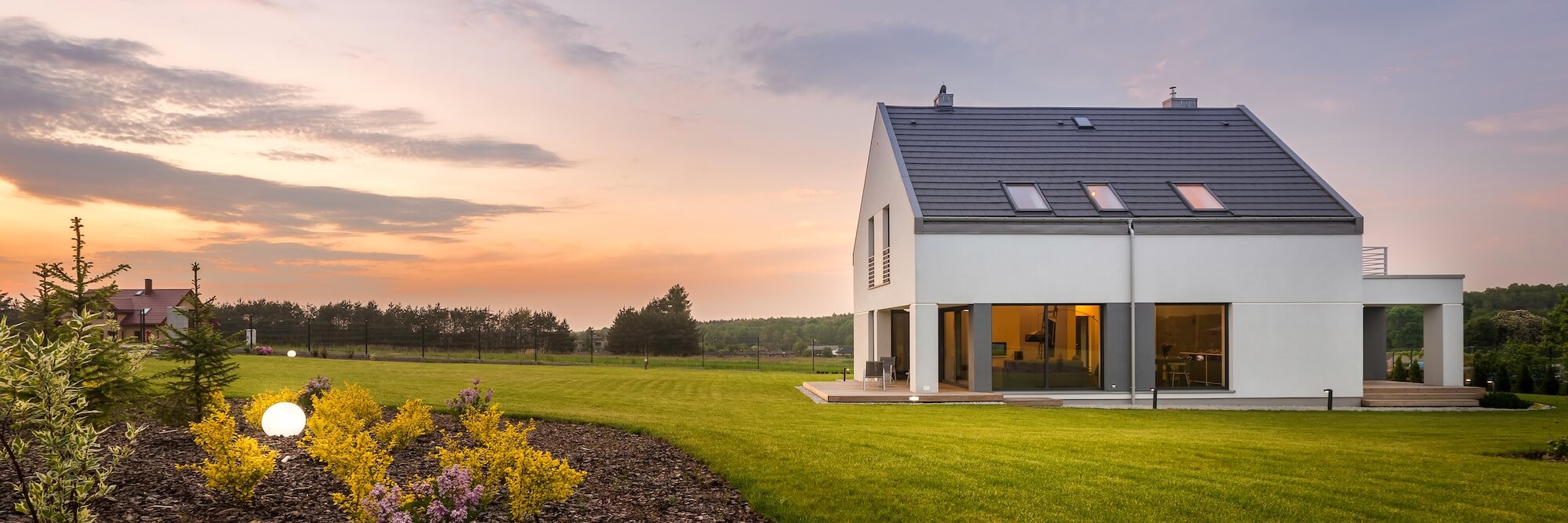
Buying a home in Switzerland as an expat
Buying in Switzerland is less about the asking price and more about meeting two bank tests - equity and affordability - and choosing a mortgage structure that still makes sense in ten years. We walk you through the decision before you sign anything.
To buy a primary home in Switzerland you generally need at least 20% equity (of which at least 10% must come from outside your pillar 2), and a Swiss bank will stress-test your affordability at a notional interest rate of around 5% plus 1% maintenance plus amortisation - aiming for a total housing cost below roughly 33% of gross income. Mortgage choice is typically SARON (variable) or a fixed term of 2-10 years, and second-mortgage amortisation is often arranged indirectly via pillar 3a for the tax saving. As of 2025, owner-occupied homes are taxed on an imputed rental value (Eigenmietwert), and permit type plus Lex Koller determine what you can buy and where.
What expat home-buyers in Switzerland have to figure out
- 01
The 20% equity rule (and the 10% hard equity)
Minimum 20% own funds, of which at least 10% must come from cash, securities or pillar 3a - not from pillar 2. Pillar-2 use is allowed for the remaining 10% but reduces pension cover and triggers withdrawal tax.
- 02
Affordability at a notional 5%
Banks stress-test your ability to pay the mortgage at around 5% interest plus 1% maintenance plus amortisation - total housing cost below roughly 33% of gross income. This is the test that most often blocks a deal, not the actual current rate.
- 03
Fixed vs SARON
SARON mortgages move with the Swiss money-market rate; fixed mortgages (2-10 years) lock the rate. The right choice depends on your time horizon, risk tolerance and how much certainty you want in your monthly budget.
- 04
Indirect amortisation via pillar 3a
Rather than paying down the second mortgage directly, many owners pay into pillar 3a, deduct the contributions and use the 3a capital later to amortise. Done right, this preserves the mortgage interest deduction longer and lowers lifetime tax.
- 05
Imputed rental value (Eigenmietwert)
Owner-occupied homes are taxed on a notional rental income (Eigenmietwert) added to taxable income, against which mortgage interest and maintenance costs are deductible. A reform has been discussed for years; until enacted, the current system still applies.
- 06
Permit type and Lex Koller
Swiss citizens, C-permit holders and EU/EFTA B-permit holders can normally buy a primary residence freely. Non-EU B-permit holders need their primary residence and face restrictions on second homes; non-resident foreigners are largely blocked from residential purchase under Lex Koller.
- 07
Wealth tax, second pillar and exit plans
Property changes your wealth-tax picture, the use of pillar 2 funds creates a future repayment question, and a sale or move abroad triggers withdrawal-tax repayment plus capital-gains tax on the property at the cantonal rate. All of this is best modelled before purchase.
Get a second opinion before you sign
In a 30-minute call we run the equity test, the affordability stress test and the fixed-vs-SARON question - then tell you whether the deal you're looking at actually works.
How we help expat property buyers
Finance & mortgage
Independent affordability and equity check, fixed vs SARON modelling, lender comparison across Swiss banks and insurance providers. We are not tied to any bank.
Plan your Swiss mortgage independentlyTaxes
Eigenmietwert, mortgage-interest and maintenance deductions, treatment of pillar-2 withdrawal and sale of the property - mapped to your canton.
Plan tax around a Swiss property purchaseInvestments & pension
Indirect amortisation via pillar 3a, pillar-2 buy-in vs property use, and how a large property concentration changes the rest of your investment plan.
Coordinate property, pillar 3a and investmentsHealth insurance
A practical review of household KVG / LAMal premium and supplementary cover - useful when monthly budget is now anchored by a mortgage.
Review household health cover before buyingHow we work with buyers
A clear three-step process designed to fit into a real property search.
1 · Free discovery call
30 minutes on video. We map your household income, available equity, permit, the canton you're buying in and your time horizon.
2 · Your buyer roadmap
A written plan covering equity strategy, affordability, fixed vs SARON, amortisation route, tax impact and a clear pre-offer checklist.
3 · Implementation, together
We compare lender offers, coordinate with your notary, and stay involved through to refinance or sale years down the line.
Run the numbers yourself
Calculators are estimates for planning, not formal tax or investment advice.
Swiss salary calculator
Your gross-to-net is the input to any affordability calculation - run it for the household before talking to a bank.
Open calculator →Tax estimator
Sense-check how Eigenmietwert, interest deductions and pillar-2 withdrawal change your tax bill.
Open calculator →Pension gap
Quantify the dent in retirement income if you fund part of the purchase from your pillar 2.
Open calculator →Property questions we hear most often
How much equity do I really need to buy in Switzerland?
What is the affordability test and why does it use 5%?
Should I take a fixed mortgage or SARON?
What is indirect amortisation via pillar 3a?
What is Eigenmietwert and how does it affect my tax?
Can I buy property on a B permit?
Let's pressure-test your purchase before you sign
A 30-minute call with an independent Hello Expats advisor - no obligation, no fees. We model equity, affordability and structure for the specific home you have in mind.
Book a free buyer consultation →